| Having trouble viewing this email? Click here to view it in Web Browser |
 |
 |
US FDA Approves SMILE for Use in Myopic Patients |
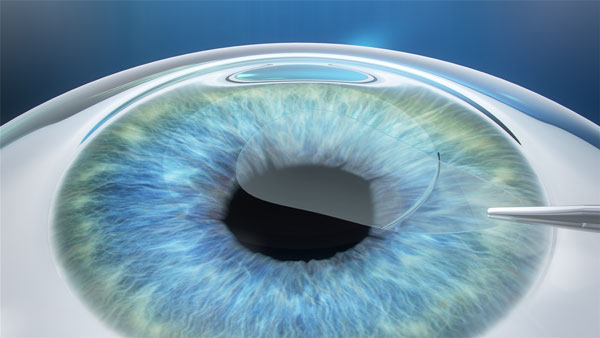
| Five years after its commercial introduction in September 2011, small incision lenticule extraction (SMILE) has finally received U.S. Food and Drug Administration (FDA) approval.1 To date, more than half a million SMILE procedures have been performed worldwide and more refractive surgeons continue to transition to SMILE in their everyday practice. "For the last 5 years, the popularity of SMILE with surgeons and patients outside of the US has continued to grow,” said Jim Mazzo, Global President of Ophthalmic Devices, and President and CEO of the company's U.S. organization. “With the FDA approval of the VisuMax SMILE procedure, U.S. surgeons now have a new premium laser eye surgery option for their practice and can offer the benefits of SMILE to their patients.” In the global market (i.e. countries such as Europe, China, Australia, Canada and India), the safety and effectiveness of SMILE have been well established. Currently available in approximately 500 clinics in 61 countries around the world, SMILE is a minimally-invasive corneal refractive procedure for myopia performed on the VisuMax® femtosecond laser platform (Carl Zeiss Meditec, Jena, Germany). Now, qualified patients in the United States can benefit from the advantages of SMILE. The recent FDA approval was based on results of a pivotal study2 which demonstrated excellent visual acuity and refractive predictability outcomes for the 336 eyes treated at five investigations sites in the US. The study's findings demonstrated that SMILE resulted in stable vision correction at 6 months postoperatively. Among the 328 participants (336 eyes) evaluated at six months, all but one had uncorrected (without glasses or contacts) visual acuity (UCVA) of 20/40 or better, and 88% had a UCVA of 20/20 or better. Because there is no LASIK flap involved in SMILE, there is no issue of flap-related complications. Furthermore, according to surgeon reports, SMILE procedure performed on the VisuMax femtosecond laser system not only led to predictable results and excellent visual outcomes, but also exhibited fast visual recovery with minimal patient discomfort. But prior to this FDA approval, numerous studies and peer reviewed articles have already been published in support of the safety and effectiveness of SMILE. For example, various studies already demonstrated the immediate and short-term outcomes of SMILE and its advantages and benefits across a wide range of refractive issues that still need to be taken care of today. From the group of Zhang et al. (China) to Reinstein et al. (United Kingdom) and Vestergaard et al. (Denmark)3-7, the published work on SMILE provided evidence on the procedure’s efficacy, safety, predictability, and patient satisfaction. In Korea, Kim et al.8 conducted a comparative study of the refractive outcomes of SMILE in patients with mild to moderate myopia versus those with high myopia. Based on their findings, the team concluded that SMILE is effective and safe for correcting high myopia and mild to moderate myopia based on UDVA, BCVA, postoperative SE, efficacy index, safety index, and predictability as outcome measures. In their assessment of the long-term efficacy, predictability, and safety of eyes after SMILE with a 3-year follow-up, refractive surgeons from Denmark (Pedersen et al)9 reported that refractive and visual outcomes seem stable. The team also reported that there seems to be a significant long-term improvement in higher-order aberrations after surgery in SMILE. More importantly, when German investigators (Blum et al.)10 reported the first long term (5-year) results of refractive lenticule extraction (ReLEx) for the treatment of myopia and myopic astigmatism, the results showed that at 5 years postoperatively, there is no significant change to the 6-month data (i.e. spherical equivalent was -0.375 D and therefore was close to target refraction [emmetropia]; and there was no loss of 2 or more lines over the 5-year period). Based on these long-term findings, the team concluded that SMILE is an effective, stable and safe procedure for the treatment of myopia and myopic astigmatism. “The VisuMax SMILE procedure from ZEISS — a major evolution in refractive surgery — has the potential to revitalize and grow the entire U.S. refractive surgery market,” Mr. Mazzo said. The FDA approval gives SMILE an indication for use in the reduction or elimination of myopia ≥ -1.00 D to ≤ -8.00 D, with ≤ -0.50 D cylinder and MRSE ≤ -8.25 D in the eye to be treated in patients who are 22 years of age or older with documentation of stable manifest refraction over the past year. To further broaden the application of SMILE in more patient population, ZEISS is currently conducting an investigational device exemption (IDE) trial in the United States involving astigmatic myopia. |
| References: | |
|
|
| EN_34_025_0008I |
 |
| This content was supported by an educational grant from Carl Zeiss Meditec AG. |
| ||||